

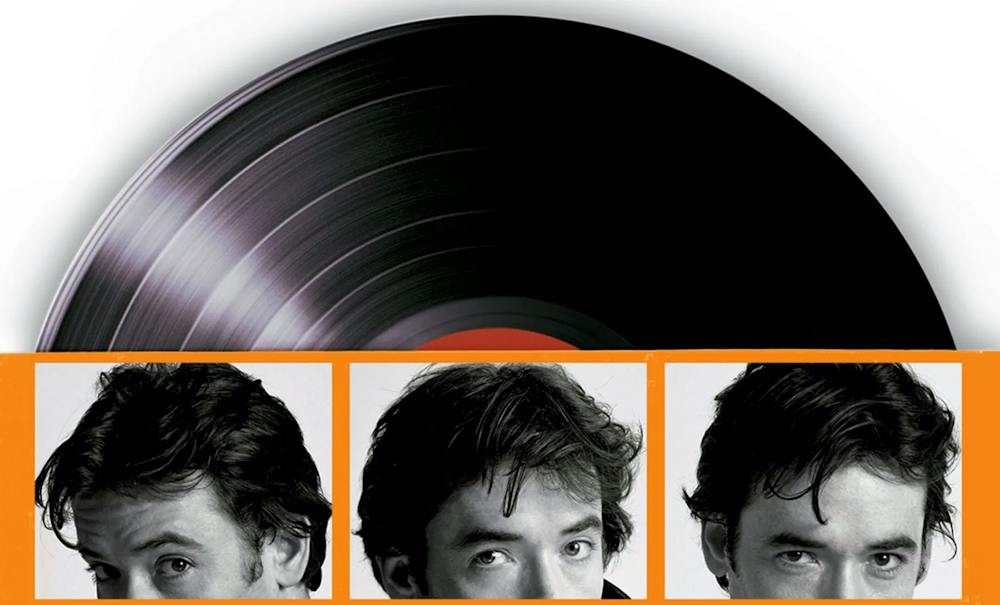

As I queued up “High Fidelity,” I suddenly found myself hassling through a situation all-too-familiar to many audiophiles: technical difficulties. Apparently, my $200 computer has devolved to the point where the HDMI cable needs to be plugged in just the right way or else nothing will work. Compared to actual turntable operation, one cable issue is a minor quibble: to spin a record to its full potential, you need the right player, the right stylus, amplifier, speakers and of course record. Everything must be perfect.
“High Fidelity” is about this search for perfection beyond records and in personal relationships. It follows a man right past the time that you can call him “young,” who buries his maturity and plans under pop culture knowledge, obsessive lists, useless categorizations and plenty of vinyls.
It would be sad were it not so gut-bustingly funny. I’d find it irritating if it wasn’t so painfully relatable. “High Fidelity,” thanks to great writing, a slew of winning actors and deep insights into what makes life worth living, is essential watching for anyone who’s had their heart broken–or collects vinyls.
The opening shot of “High Fidelity” is (what else?) a spinning record, enjoyed by Rob Gordon. His girlfriend, Laura, tearfully walked out on him, but that totally didn’t bother him. Totally. To prove as much, in a recurring fourth wall-break, he recounts to us his top five heartbreaks that definitely hurt him more than Laura.
He further tries to distract himself by attending to his record store and two employees (one of whom is a hysterical Jack Black). It doesn’t work. The “top five breakups” list becomes a group of women he must revisit to figure out where it all went wrong, and maybe how to grow up a little along the way.
As it’s being screened for the vinyl club, I’m pleased to say that the small delights for the record-obsessed are endless. The culture of audiophiles is brought to comedic extremes throughout “High Fidelity," from Jack Black castigating plebeians for their basic tastes to the other, timid employee chastising Rob for temporarily storing records in stacks instead of rows (too much pressure on the grooves, of course).
The soundtrack is packed with enough indies that every music fan will light up with joy at least once. My moment came as soon as I heard the opening harmonica of Liz Phair’s “Baby Got Going.” The film may poke fun at certain tendencies in serious music circles, but the screenwriters’ understanding of the material proves that it’s far from mocking. It becomes clear that Rob and his employees’ devotion to music is not a sign of their childishness: to find true contentment, they have to embrace it wholeheartedly beyond the comforts of judging behind the clerk desk.
Rob’s escape from arrested development, which forms the backbone of “High Fidelity,” is arguably even harder to get right. From moment one, Rob’s self-centered yet totally lacking in self-awareness, incapable of thinking in depth about anything but pop culture, objectifying women and boundlessly petty. But we root for him anyway. Why? Because his flaws are deeply human. The clever screenplay never makes excuses for him, but also never turns the movie into an exercise in sneering at his patheticness.
John Cusack’s excellent performance shows that despite all his whining and hilariously pitiable desperation (he calls up his ex for a meeting literally just to ask if she’s slept with her newest partner yet), deep down, Rob wants to be better. His sense of shame in confessing his worst moments is palpable; when he calls himself a bad person for a particularly gross transgression, we know he believes it just as much as we do. You groan as you watch the depths he sinks to, but the movie groans with you. It’s like watching your best friend who can’t get their grades together no matter what: sad, somewhat funny, but tinged with hope that they’ll pick themselves up.
There’s another component to “High Fidelity’s” Rob that makes him likable. Rob is not simply an insufferable man-child; he’s the insufferable man-child within all of us. Male or not, straight or not, most of Rob’s antics should ring a bell. How many of us have endlessly analyzed one singular sentence our special person spoke, reading far more subtext into it than any sane person would? What about fantasizing about totally owning your biggest enemy, only to act noncommittal and meek in real life? Or, more generally, have you spent far more time dwelling on the past, our hobbies or our minor squabbles than what really matters? Probably, yes. Even if you’ve never played a record or been in a relationship in your life, some part of “High Fidelity” is bound to resonate.
The cold, hard truth about records is that most college collectors will never attain the perfect circumstances for listening. The only affordable players are Crosleys, whose cheap construction sends longtime collectors into conniption fits. But you know what? That’s okay. If playing records on a suitcase turntable leaves you satisfied, no audiophile can take that away–and it’s preferable to waiting around for a $500 Audio-Technica.
In a similar way, “High Fidelity” is witty, comical and touching, but also a trenchant observation that you shouldn’t wait for your dreams to magically come true one day. Accept life for what it is, warts and all, and take full advantage of it to live to your fullest potential.
“High Fidelity” was screened in 210 Allyn Hall at 6:30 on Thursday, Oct. 8, courtesy of the Vinyl & Music Club.


