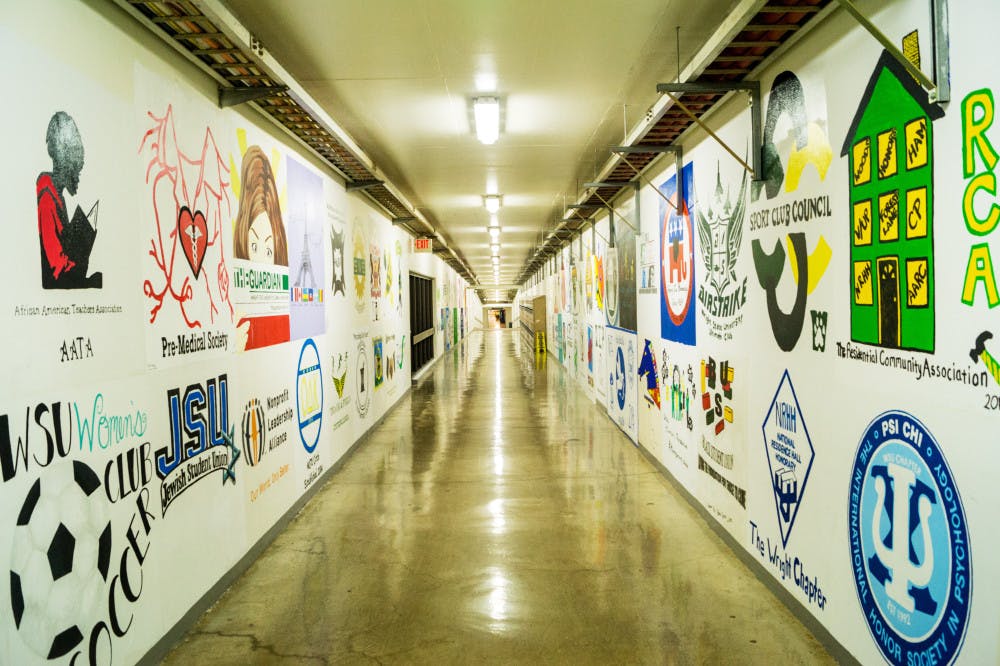
During the spring semester of 2025, the announcement that all efforts to support diversity, equity and inclusion, also called DEI programs, must legally shut down in compliance with Senate Bill 1 rocked campus life. Now, several months later, Wright State University students are still dealing with the fallout.
Diversity, equity and inclusion
The date of Jan. 20, 2025, marked the beginning of substantial changes that swept across the country.
The Trump Administration Announced, “The Biden Administration forced illegal and immoral discrimination programs, going by the name ‘diversity, equity and inclusion’.”
As a public school, WSU was forced to comply with the new laws, or lose federal funding, which is how WSU supports many of its students. The Cultural and Identity Centers (CICs) lost their staff and funding, leaving many students without their safe space or resources on campus.
The impact on students
Elizabeth Harvey, a junior acting major, was employed as student worker at the Women’s Center. She helped run public events, worked the front desk and offered her services as needed. For her, the Women’s Center was a welcoming space to learn about women’s health and wellness, connect with others and highlight the strong women on the WSU staff. Harvey's initial reaction to the program's closure was sadness.
“I cried. I cried a lot. It was like a punch in the stomach, it felt demoralizing. It just hurts so much to have that taken away. It's losing the resources that came with the center. It’s losing that safe place. It's losing the people I can talk to, it's losing mentors, it's losing community,” Harvey said.
The former employee expressed that working in the Women's Center, she was able to guide women in times of need to proper resources, and that is no longer possible.
Staff reaction
Dr. Emily Yantis-Houser, the former Assistant Director of the LGBTQIA+ Center, expressed an initial reaction similar to Harvey’s.
“It was shocking that we have to do this, that this space and resource is being eliminated,” Yantis-Houser said.
For many, the CICs on campus created a safe, inclusive and educational place. The laws in effect create a void in education and resources available to students. Much of the work now falls onto student-run clubs who do not have the proper funding, compared to WSU-funded resources. Nevertheless, support is not completely eliminated in all ways.
“I’m still teaching," Yantis-Houser said. "I’m still connected with the students. I can share my expertise and my resources. And so, I continue to do that, just in a different capacity.”
Even with the CIC itself gone, many former employees and student-led groups continue to provide aid in ways that fall in line with the new laws.
The future
Girls, Gays and Theys Night is an event held once a month in the climbing gym in connection with the Outdoor Recreation Center. Harvey, who helps host this event each month, hopes to provide "a safe place" at least once a month for those who may feel intimidated by the sport.
"Creating safe places for certain groups is not demoralizing any other group. It's simply not. And to pretend that groups do not need support or additional resources is ignorance,” Harvey said, in reference to President Trump’s remarks about DEI.
As students and administrators navigate this uncertain future, hope remains for diversity resources on campus. Students continue to step up to fill this new void on campus. There are still ways to get involved and create a sanctuary for those who need it.