Art Gallery | Photo by Bethany Althauser | The Wright State Guardian
From now until March 29, the Culture and Identity Centers is holding an art and poetry exhibit by artists Markel and Lindsay Haralson, a husband and wife artist duo. The exhibit challenges the expectations of Black women throughout the world, and it has inspired many on campus since its opening on March 7.
The artists
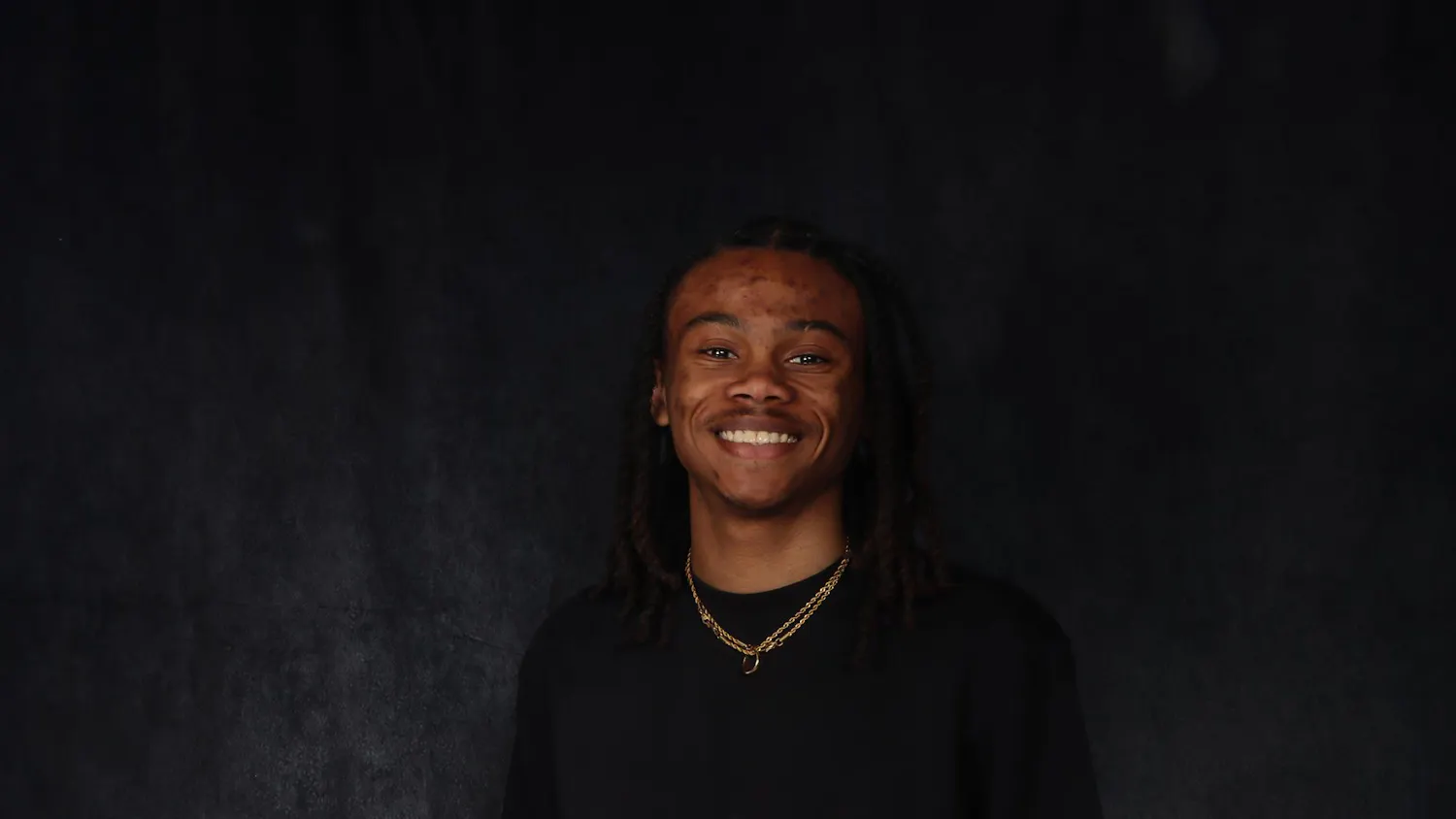
Lindsay Haralson is an alumna of Wright State University and Markel Haralson is a Detroit-raised artist; the two of them currently live in Ohio with their daughter Zora and son Nile.
They met through his cousin and her mom conspiring to bring them together; Markel Haralson describes their meeting as “fate intervened, aligning our paths in a way that felt destined.”
The two work together to present art exhibits alongside their day-to-day lives. Art is a large passion in their lives, especially Markel, who has a degree in graphic design and even has his own website promoting his artwork.
“I’ve been immersed in art for as long as I can remember, but what truly ignited my passion was the desire to leave a lasting legacy for my daughter Zora and son Nile,” Markel said.
As the exhibit runs throughout the entire month of March, students are suggested to view the exhibit during regular hours of the Culture and Identity Centers.
Markel Haralson provided an uplifting message about the exhibit to Wright State students.
“If you’ve ever hesitated to take a leap of faith or struggled with your identity, our show is for you. It offers insight into the journey of a Black woman and a husband-and-wife duo navigating life’s complexities. Embrace imperfection as a form of perfection,” Markel Haralson said.
How it came to campus
Dr. Brian Boyd, associate professor and chair of Teacher Education, had viewed a similar exhibit by the artists in the past fall and decided to reach out about holding something on campus.
“[I] thought that Markel and Lindsay’s work might resonate with our WSU students, faculty and staff,” Boyd said. “The focus of Lindsay and Markel’s work is on Black women, and I think the exhibit is one way that WSU can highlight Women's History Month.”
Through contact with multiple departments on campus, the exhibit made its way to the Culture and Identity Centers, where multiple exhibits similar to the Haralson’s have been held in the past.
Bobbie Szabo, assistant director of the Women’s Center, believes it is vital for these types of art exhibits to be on campus.
“It’s incredibly important that we host exhibits and programs that make marginalized populations feel seen and heard—more than that, it’s important that they are seen and heard, and that we, the university, act upon the expressed needs,” Szabo said.
The particular subject of this month’s exhibit, which is focused around addressing microaggressions, common conventions and expectations and how these can be rewritten, according to Szabo, is something all students should immerse themselves in and stay informed on.
The artwork
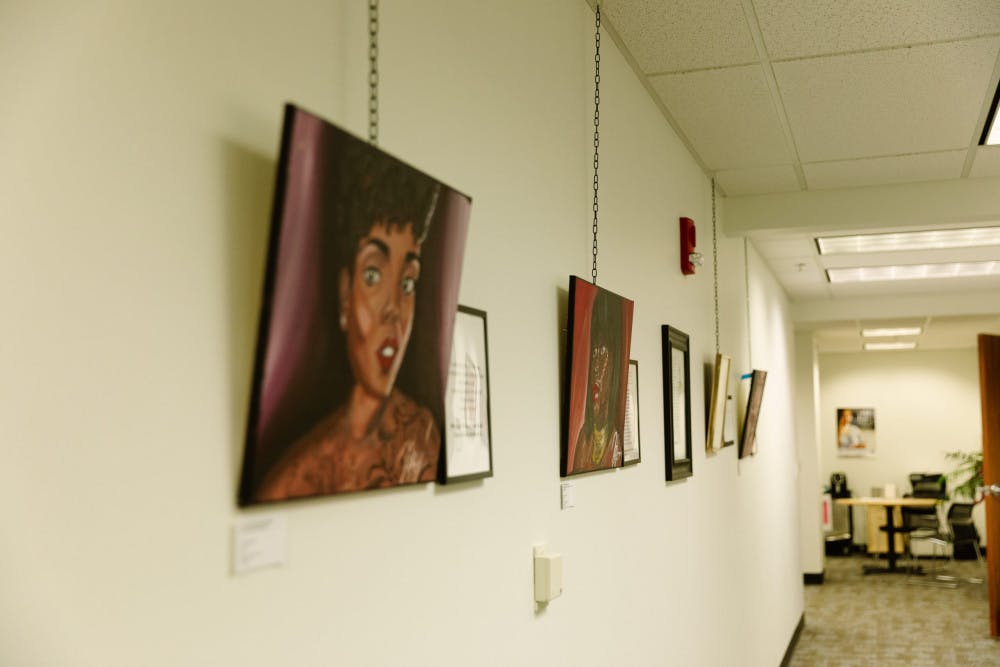
The exhibit itself is a series of paintings by Markel and accompanying poetry by Lindsay.
All of the paintings depict Black women. There are many portraits, all painted with acrylic, with a poem sharing the same name. All of these pieces got their own love through the discussions during the ceremony planned alongside the opening.
Visitors were given a bag containing stylized coins along with the instruction to drop a coin into an accompanying box closest to any artwork that spoke to the viewer the most. Students and faculty took their time observing each piece and dedicating which ones were worthy of their golden coins.
Mentioned favorites include “Why can’t we Smile? An Offering to all the black women who wanted to smile while living the blues,” “Why can’t we be confident? Zora Neale Hurston would be proud” and “We can’t we wear Red? It doesn’t belong to just the fairer skinned.”
Some of the art featured in the exhibit, as well as other pieces, are available on Markel’s website.
Surrounding opinions
Daniel Wasniewski, a political science major and French minor, attended the event both for a course project and also out of passion for cultural art.
“I am an art buff, and I consider various works of art that are culturally and aesthetically significant to be of immense interest to me,” Wasniewski said. “[It is important] to inform students and the broader public of various artistic traditions, which are not always emphasized in the mainstream media or artistic institutions.”
Szabo expressed her reasons for finding the exhibit so important, which is something everyone should consider, especially students at WSU.
“College/university is all about world-expansion—learning new things, experiencing new things, stepping out of one’s comfort zones [and] figuring oneself out. Exhibits like ‘Why Can’t We?’ are part of this world-expansions, and I encourage students to make the most of these opportunities while they are accessible and free to them,” Szabo said.
Future works
Markel Haralson has expressed an interest in returning to WSU to continue inspiring change through his and his wife’s work, though there are no known plans for the duo to return at this time.
The two continue to hold art exhibits throughout Dayton and beyond; students can visit Markel’s website to learn more about upcoming events. Their art is loved in the community for the special stories each piece tells.
“It’s the joy and sense of self-comfort in the women portrayed. It’s the way each of these call out for community and recognize the Black women who have paved the way for progress. We owe most progress in most social movements to Black women—oftentimes disabled Black trans women. This is an incredible ode to them,” Szabo said.
The artists and faculty of WSU encourage students to attend the closing ceremony in 019 Student Union on March 29 from 5 to 7 p.m.