Skip to Content, Navigation, or Footer.
The National Weather Service has issued an alert - Flood Watch - More Info
What: Flash flooding caused by excessive rainfall is possible. Where: Portions of east central Indiana, including the following county, Wayne and Ohio, including the following counties, Auglaize, Champaign, Clark, Darke, Delaware, Franklin, Greene, Hardin, Licking, Logan, Madison, Mercer, Miami, Montgomery, Preble, Shelby and Union. When: From midnight EDT tonight through Thursday afternoon. Impacts: Excessive runoff may result in flooding of rivers, creeks, streams, and other low-lying and flood-prone locations. Additional Details: Multiple rounds of rain will occur overnight into Thursday. The heavier bands of rainfall will have 2 to 4 inches with locally higher amounts. Precautionary and preparedness actions: People in the watch area should keep an eye on the weather and be prepared for immediate action should heavy rains and flooding occur or a Flash Flood Warning be issued. Avoid low-lying areas and be careful when approaching highway dips and underpasses.
|
The National Weather Service has issued an alert - Severe Thunderstorm Warning - More Info
The National Weather Service in Wilmington has issued a Severe Thunderstorm Warning for: Northern Preble County in west central Ohio, South central Darke County in west central Ohio, Northwestern Montgomery County in west central Ohio. Until 615 PM EDT. At 529 PM EDT, a severe thunderstorm was located near New Madison, moving east at 30 mph. Hazard: 60 mph wind gusts. Source: Radar indicated. Impact: Expect damage to trees and power lines. Locations impacted include: Eaton, Lewisburg, West Alexandria, Clayton, Brookville, New Lebanon, Phillipsburg, Eldorado, Verona, West Manchester, Gordon, Ithaca, Castine, Oklahoma, Interstate 70 at US Route 127, Pyrmont, and New Hope. This includes I-70 in Ohio between mile markers 4 and 23. Precautionary and preparedness actions: For your protection move to an interior room on the lowest floor of a building. To report severe weather, go to our website and submit your report via social media, when you can do so safely.
|
The National Weather Service has issued an alert - Severe Thunderstorm Warning - More Info
The National Weather Service in Wilmington has issued a Severe Thunderstorm Warning for: Southwestern Champaign County in west central Ohio, Northwestern Clark County in west central Ohio. Until 615 PM EDT. At 536 PM EDT, a severe thunderstorm was located near St. Paris, moving east at 25 mph. Hazard: 60 mph wind gusts. Source: Radar indicated. Impact: Expect damage to trees and power lines. Locations impacted include: Springfield, Urbana, Northridge, St. Paris, Christiansburg, Tremont City, Thackery, Westville, Kiser Lake State Park, Millerstown, Terre Haute, Lawrenceville, and Dialton. Precautionary and preparedness actions: For your protection move to an interior room on the lowest floor of a building. To report severe weather, go to our website and submit your report via social media, when you can do so safely.
The Wright State Guardian
Wednesday, Sept. 16, 2026 | News worth knowing
Wright State Guardian

DSC_0341-scaled

Two-Week Water Advisory Caused By HVAC Accident, Contractors Worked Without Permits

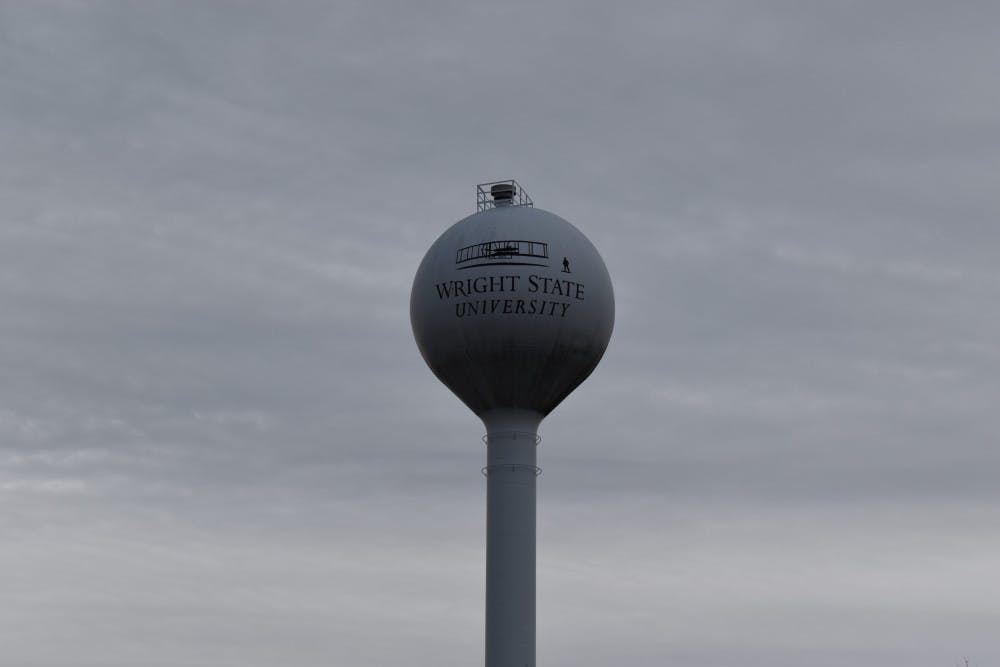
Wright State Water Tower | Photo by Grace Ramsdell | The Wright State Guardian


The Wright State University (WSU) campus water advisory caused by an HVAC construction accident is resolved. In the process of fixing the issue, the university discovered contractors working on the systems did not obtain the correct digging permits. 

Water warning

Maintenance crews working on the HVAC air system accidentally punctured an underground pipe containing the toxic chemical glycol according to WSU’s Environmental Health and Safety Board.  It was later reported by campus officials that these contractors did not have the correct digging permits, and did not have permission to dig near this pipe.

This pipe, not directly connected to the water system, leaked into a connector pipe that leads into the main water system. This leak caused contamination concerns, triggering the water advisory. The precautionary warning, issued in the second week of June, advised students, staff, faculty and WSU campus guests not to drink or use the water on campus for any reason due to possible contamination from the accident. 

Despite concerns, WSU’s Environmental Health and Safety Board reported that no cross-contamination in the water system occurred and that they contained the incident to the Biological Sciences Building.

The Board also reported the two-week delay in lifting the water advisory stemmed from water testing and flushing out the system. 

“In general, the advisory is issued, the corrective measures are taken, the system is rechecked, and the advisory is removed when the water quality meets the EPA’s standards,”  Marjorie Markopoulos, director of Environmental Health and Safety, wrote. 

Prevention

In their statement, mentioned above, the university expresses future construction projects will follow campus policies and ensure that contractors have the proper permits. 

Student Opinions

During the advisory, summer semester students continued with normal campus life. Some students like senior Josiah Pugh expressed some annoyance at the inconvenience but are overall satisfied with WSU’s handling of this incident.

“I think they did a pretty decent job,” Pugh said. “Especially through the emails and putting signs on all the doors of the buildings.”

Initially, details of the construction accident were not released to the students. As the advisory continued, the campus communication system kept students, staff and faculty updated about the situation. Signs were posted in all the campus buildings. 

Tap Water Results 

During the water warning, the Environmental Health and Safety Boardpublished their annual consumer notice of tap water results report. Testing of campus tap water, not related to the pipe accident, is conducted each year required by the Ohio Environmental Protection Agency (EPA). 

According to the results, six areas on campus were identified with more than 15 parts per billion (ppb) of lead in the water. The report also pointed out that lead, if consumed in large amounts via drinking water, can be dangerous to humans, especially children and pregnant women. 

The university attributed the spike in lead content to water sitting in the pipes due to inactivity during the coronavirus pandemic. During the testing period, WSU increased offerings of in-person classes, while students continue to live and work on campus through the summer semester. 

According to the statement made by the university, plans to solve the issue include flushing out the system and increasing testing throughout the academic year. 


Read More

Latest Podcast

On today’s episode of Off The Record, hosts Kylee Lairmore and Macie Allen have on special guest, The Guardian's News Editor, Ashley Hainzer. Hosts spend some time getting to know Ashley and her involvement at The Guardian. The girls then discuss Student Press Freedom Day and the importance of student journalism. Lastly, the girls discuss their anticipated spring break plans.

- New Episodes Every Monday at 6:30 pm EST
- If you want to be a part of an episode, have any ideas, tips, comments, feedback, etc. DM us on Instagram @wsuofftherecord

- Like, Comment, Subscribe!
-Here’s your reminder to read the G! Wright State Guardian

-Follow our social media!
-Instagram @wsuguardian, @wsuofftherecord, @kyleelreports @maciemakesmedia @ashelyinthenews

-TikTok @wsuguardian

-Facebook @TheWriteStateGuardian
-X @wsuguardian


Trending