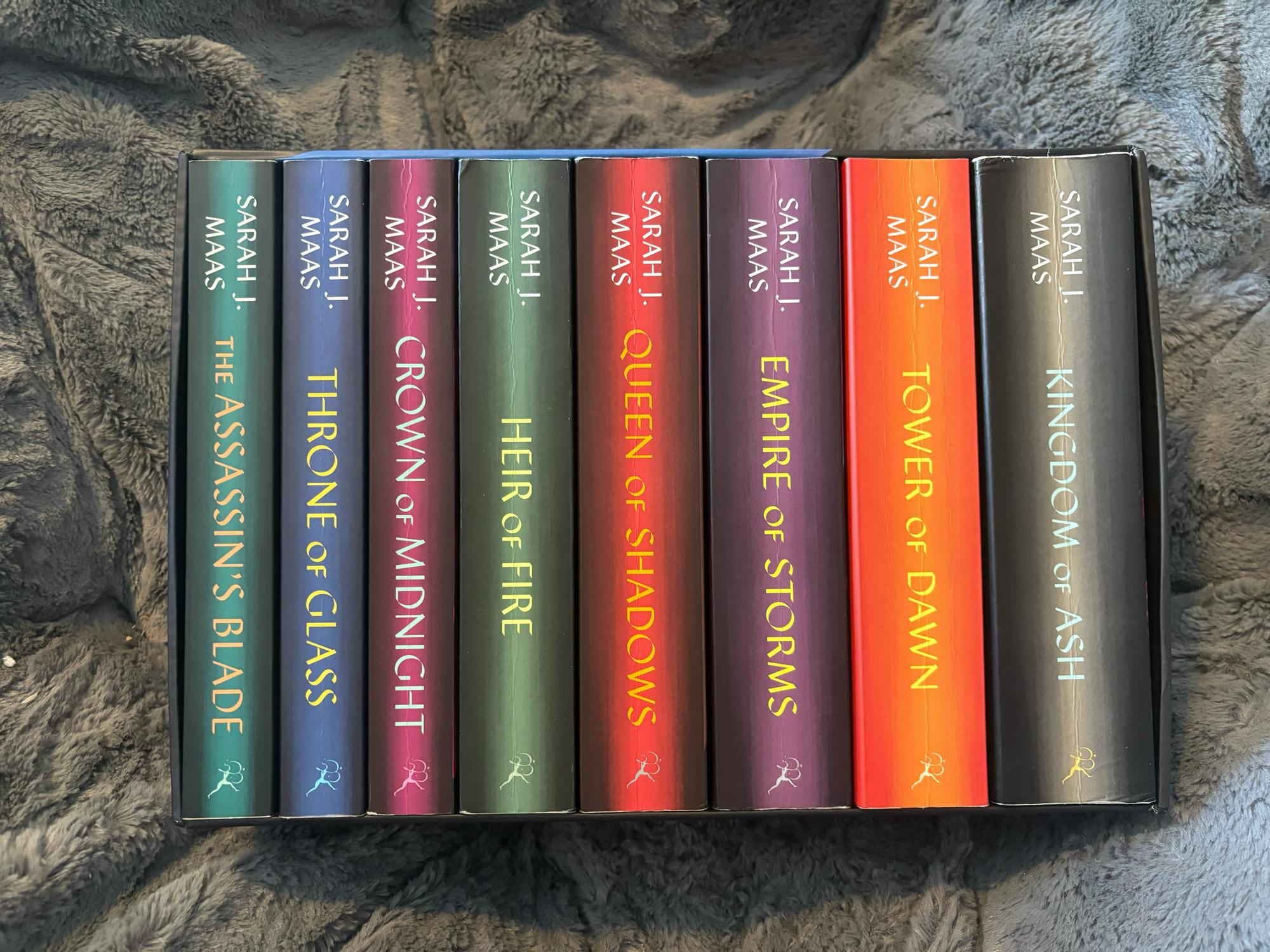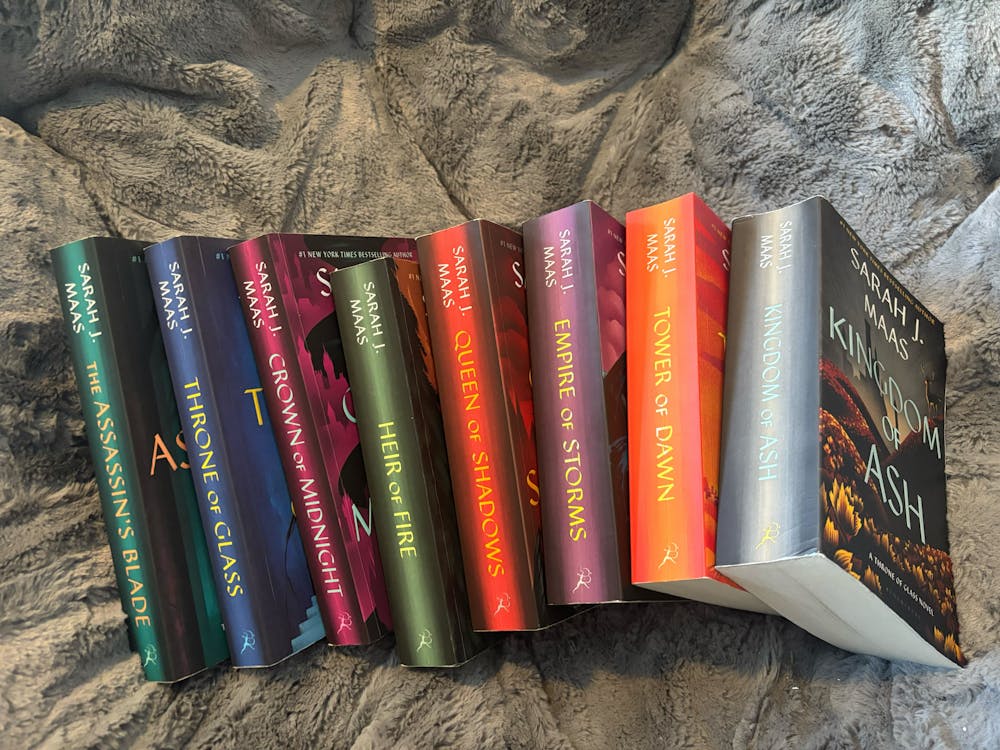
Sarah J. Maas is the New York Times Bestselling Author of the popular fantasy romance series “Throne of Glass.” There is a lot of discussion and debate about what order the books should be read in. Since I recently finished reading the eight-book series, this is a guide to my opinions about the best way to read the series.
And since I want others to have similarly exciting reading experiences, I left out things that I would have deemed a spoiler. There is mention of characters, themes and repeated phrases, but no explanations behind them are given.
Warning: these books and this fandom bring a lot of pain, at times, but for many readers, it is worth it for such a series that holds them like an iron box. Some of these may be alluded to but will only make sense for those who have read the series.
“The Assassin’s Blade”
Perhaps the biggest debate in the fandom is about when the best time to read this book is. The most popular choices are chronological order, which puts this prequel first, or publication order, which puts it third. While I fell into the second camp for my reading, I believe the prequel should be read first.
There are many twists and turns throughout “The Assassin’s Blade,” a few of which are spoiled if you read it third. While there is still plenty of new content in this book for those who choose this reading route, you go in knowing the ending of this short story collection. In this book, a character named Sam introduces the motto “My name is (fill in character’s name), and I will not be afraid.” He and his love interest, another main protagonist, both repeat it throughout their time in the series.
Now is as good a time as any to bestow my best advice to you, going into this book and series: do not look up fan art of any of the characters, no matter how badly you want to. You can do this when you get to the end of the third book, at the absolute earliest, which works regardless of which book you choose to read third. Whether you take this advice or not, you will know the reasons when you get there in the narrative– or when you see spoilers in the fanart ahead of time.
“Throne of Glass”
In this novel, readers follow Celaena, the titular young assassin of the previous story. She partakes in a competition for a menacing king, uncovering mysteries and a forbidden, ancient magic along her way.
Despite her occupation, Celaena manages to befriend many of those who cross her path. As you read this book, pay attention to her casual charms and enjoyment of the finer things in life, as they all lend into a richer character than she would let on to the king. For those Celaena does not befriend, the majority become vicious enemies. Some of these foes are defeated in this novel, but many will continue to plague her and her friends throughout the series.
This story lays the groundwork for the rest of the series, showing Maas had a clear vision for where she wanted to take the series from the beginning, while also highlighting her restraint, with how little she introduces in this book compared to the rest of the series.
“Crown of Midnight”
A flawless continuation of the previous novel, “Crown of Midnight” amps up the moody drama surrounding the palace of Adarlan. The antagonist, the King of Adarlan, looms over the plot, deepening tension as readers follow Dorian, the King’s oldest son and heir, enjoying his pretty sapphire eyes and flirty banter with foreign princess, Nehemia.
As the plot heats up in this novel, rebellions within Adarlan come to light, challenging the true allegiances of many characters– even those alliances which readers would have never thought to question after the first novel.
Friends betray one another, and the ending of this story will make you want to keep moving forward, not go back in time. That is why I advise this being the third book you read in this series.
“Heir of Fire”
This novel marks a major turning point in the series, introducing many key characters. Among these are Rowan, Aelin and Manon, all of whom are fan favorites for good reason. While this is easily observed in the fandom, it is also popularly discussed how frustrated readers feel when some of these characters are introduced and made a primary focus.
This is especially true of Manon, a witch character who works for the King of Adarlan. Her plotlines and character illustrate the wars’ complications and complexities, and that things are not all as they seem.
This book also introduces the Western continent, where a whole new host of allies– and enemies– await our protagonists with magic that is still forbidden in the primary lands of the novels.
“Queen of Shadows”
With all the main characters back on the same continent, a lot more planning needs to be done before our protagonists are ready to wage and withstand the upcoming war. Readers meet Elide, a spunky, illiterate girl with a chronic foot injury, as she attaches herself to Manon’s witch coven for protection in attempts to fight her way to freedom.
Protagonists who have never crossed paths before clash, heating the war and reminding readers that stakes are life and death, and no character is safe.
Childhood connections are reforged and redefined, with characters like Aedion and Lysandra taking more central roles in the story. As conspiracies are executed both with and without the readers being privy to the plans, the plot takes shape, with many unpredictable twists.
“Empire of Storms”
To tandem read, or not to tandem read– that is another big question in the fandom. My personal advice is to do it. There are guides online that make it easy, and the chunks are divided so you read a few chapters from this book, then a few from “Tower of Dawn,” and so on. Some people are intimidated by the idea of switching back and forth, but it was super doable, and a fun reading experience that is unique to this series.
I did the tandem read, so I can tell you that there are many moments line up perfectly between the two novels, creating opportunities for readers to laugh out loud at the way that the characters continue to interact between two different continents.
Most of the characters readers know and love remain on the familiar continent, but the gang is still fractured as they each go off on their own quests. As a result, tandem reading allows readers to follow all the characters at once, as if this book and “Tower of Dawn” were one long adventure. Which, since they happen at the same time, they ultimately are.
“Tower of Dawn”
Introducing yet another continent, readers follow Chaol and Nesryn as they journey to the Southern continent in a desperate hope to attain more forces for the upcoming battles. With it being wartime, they also go seeking out aide from the famous healer’s tower, meeting Yrene, the most talented healer in the land. With her help, they work to convince the nation’s impressive government to aid in their cause.
Finding that the Southern lands have already been infiltrated by the same enemy they came to warn the government about, the protagonists work to uncover the truth, finding some shocking pieces of information that, when read in tandem with “Empire of Storms,” reveal the true danger every person in this series faces.
Exploring a peaceful new culture within the vast world, Maas raises the stakes of the series in many ways through this novel. Read in tandem with "Empire of Storms," readers can avoid having an entire book between the intense cliffhanger at the end of the previous novel and finding out what happens in the series finale.
“Kingdom of Ash”
The perfect conclusion to an epic series, little more that can be said about this book without spoiling aspects of it. However, be on the lookout for the mantra “you do not yield.” While this may be the catchphrase of this book’s main protagonist, it was also evidently Maas’s motto as she wrote this book, driving each emotional moment home for readers.
Almost one thousand pages in length, this book leaves readers with their questions answered and wraps up every thread within the series. Maas ensures that fans of the “Throne of Glass” series have their hearts ripped out a few times, but that they also feel content by the end of the book. This ultimately creates a feeling within fans that is nameless, like the final price of the gods in this series.
If you have any interest in the series and have not read it yet, this was your sign to do so. Make sure to come back when you understand all the references.