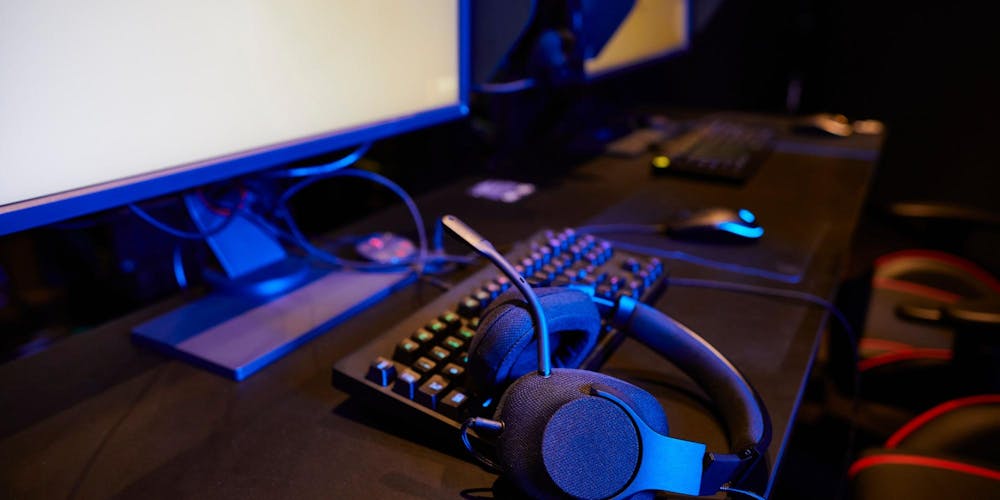
Wright State is home to an active student eSports community, which could potentially see impacts from a law change by the European Union (EU) regarding microtransactions.
WSU senior and computer science major, Joshua Quaintance, is also the Secretary of eSports for the campus community organization. Quaintance shared how these changes could impact WSU eSports.
“For most competitive games it wouldn't affect much at all, except for a few games that require you to pay for certain services. But in most competitive games like Valorant and Overwatch, there isn't really any payment needed for any advantages. The only thing you need is skins, if you want to get skins, and stuff. Cosmetics," Quaintance said.
In these competitive games, you have the option to buy visual enhancement features, but they do not help in any way, other than changing the game's aesthetics.
“From what I know, the microtransaction law is trying to make sure that game companies are putting an actual dollar value on the purchase of in-game [products], instead of these in-game currencies," Quaintance said. "What I see mostly impacted would be like the gotcha games– the ones that you need to buy, purchase, to get characters and stuff like that. But there's not that big of a competitive scene on that."
Quaintance explained that he finds it helpful to have US dollar amounts on in-game purchases, so he and other players know what they are buying.
Aaron Anderson is a computer science major and sophomore student at WSU. He is well-versed in the topic, as a gamer himself. Anderson explained that, in his view, the bad part of microtransactions is that they can be predatory or harmful for the consumer.
“Currently in the European Union, they're having microtransaction laws basically going against predatory behaviors of video game companies when it comes to microtransactions," Anderson said. “It would have to depend on the game. Certain games, like Overwatch, have bundles [set up]. You buy it with US dollars, versus games like Call of Duty, Battlefield 6, using in-game currencies to try and get that little bit more profit out of the consumer.”
Jordan Burnett, a computer engineering major and freshman at WSU, referenced the impact these laws may have on eSports.
"Tournaments, like for Overwatch 2, are the first season we have had where players have been allowed cosmetics and skins. Most people also play on specific competitive accounts that do not have access to those. So generally, everything's standardized. I think a lot of game companies, again, Overwatch, for example, that's the game I play. It has two different currencies. If you see something you want and you just buy it, I think that is just a better way. More people will be better at engaging with the system, rather than psychologically forcing people," Burnett said.
While there can be positives and negatives that come along with these new laws, they do impact people, especially the students at WSU's eSports and all gamers.